How do two families buy a house together?
One property, two owners, and a building divided so that each household has a home of its own and a door of its own. What makes it hold together is a written co-ownership agreement and a settled answer on the mortgage, both dealt with before you buy rather than after.
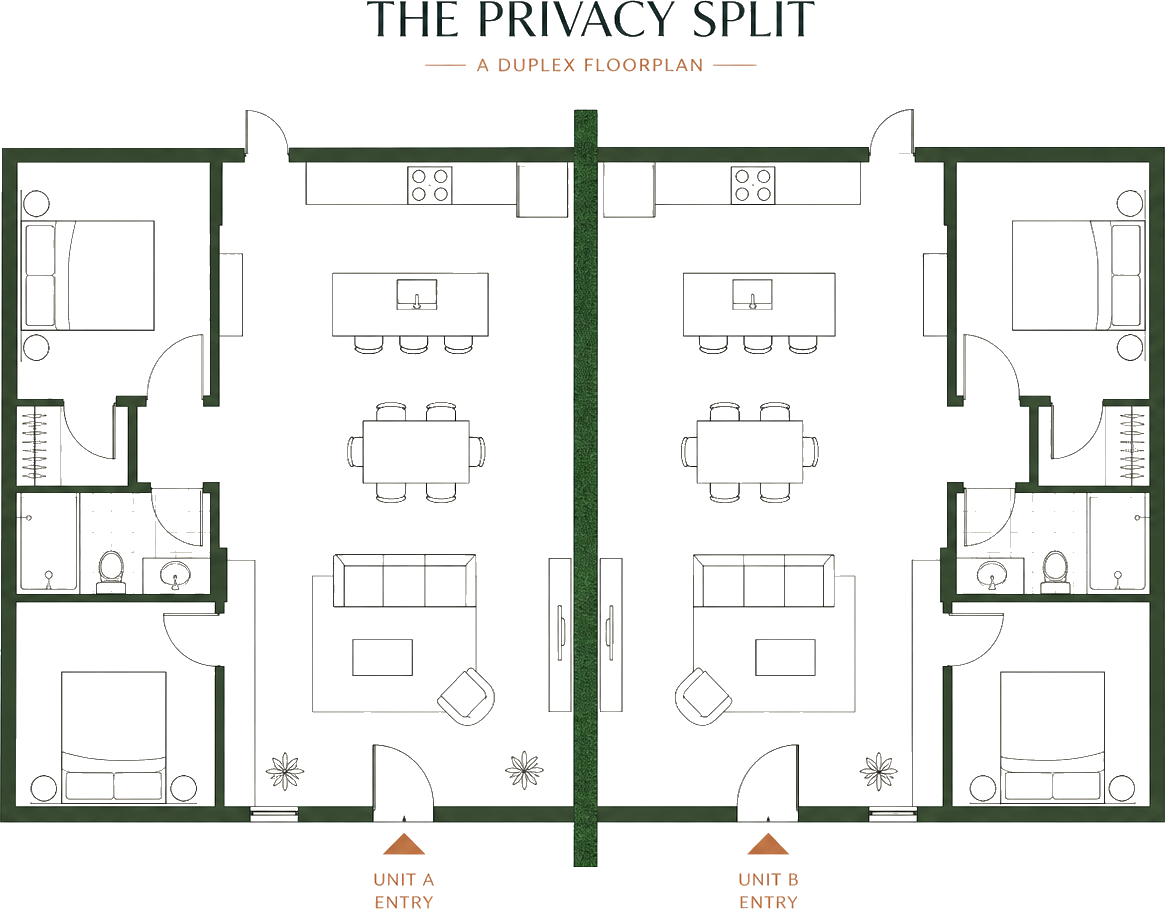
The sequence, in the order it actually happens
Most of the difficulty people expect comes from doing these steps out of order, usually by finding a property before settling the money and the exit.
- Settle the partner. Either you already have a household to buy with, or you join the co-buyer list and get matched to one.
- Get the financing answer. Whether you share one mortgage or each hold your own follows from the ownership structure and from the lender, so it is confirmed with a mortgage professional before you shop.
- Agree the terms in principle: who contributes what, who occupies which unit, and how someone leaves.
- Have a lawyer draw up the co-ownership agreement covering notice, valuation and first opportunity to buy.
- Then buy, either by converting a house one of you already owns or by purchasing something suited to being split.
- Design and permit the split, and build it, with scope agreed in writing before work starts.
Talk about these before you talk about houses
These are the questions that decide whether the arrangement holds, and they are all cheaper to answer now than later.
- How much notice does a household have to give if it wants out, and how is the property valued at that point.
- Does the remaining household get the first opportunity to buy, and how is that funded.
- Which unit is which, whether that is fixed, and what happens if both households want the same one.
- Who pays for what once you own it: the roof, the shared driveway, the insurance and the yard.
- Whether either of you intends to let a unit, remembering that the CMHC suite programme requires at least one unit lived in by you or a relative rent free and rules out short term rentals.
- Whether either household expects a relative to move in, which is what makes the Multigenerational Home Renovation Tax Credit relevant and its once in a lifetime limit worth checking early.
What matching involves if you have no partner yet
It is a screened process with a decision point at every stage, and either side can stop at any of them. First comes a questionnaire: what you can spend, when you want to move, the areas you would consider, and the everyday habits that decide whether two households can live alongside each other. Then a criminal record check, then a phone interview. If that goes well, each household receives a short summary of the other, stripped of surnames and of anything about their money.
No identifying detail changes hands unless both households have said yes, and the coffee is arranged only after that. Declining needs no explanation, which is deliberate: a matching process only works if saying no is easy.
The trade offs, plainly
What you gain is a detached property on one household's share rather than one household's whole budget, plus a yard and the floor area of a house, and proximity to family without a shared front door.
What you take on is a co-owner. Selling is a negotiation rather than a decision, refinancing usually involves both households, and the arrangement has to be written down instead of understood. If you want it to stay informal, this is the wrong structure, and that is a reason to say so now rather than at the lawyer's office.
Credentials
One next step
Join the co-buyer list
Answer the questionnaire and Cam looks for a household that fits how you actually live. No introduction happens without a yes from both households first.